Sunday, January 31, 2010

Mired in Meier--Part One

I have long been a fan of Richard Meier, but lately I seem to be inundated with information concerning Meier and his career, so I felt it was about time for a series of posts about one of the greatest American architects of all time.

The first thing was that I'd heard that the warehouse space in Long Island City where the firm stores all their models is open to the public by appointment, on Fridays from mid-May until mid-October. I was flabbergasted that I'd never heard that before, and was terribly excited, so I made an appointment to go. I was by myself, and ended up being sandwiched between two huge groups of (presumably architectural) college students. The timing was excellent, because I basically had the whole place to myself. I was greeted by two terribly nice representatives from Meier's office, a woman I believe from the public relations department and a young guy who helps construct the models. They were both extremely helpful and I really enjoyed talking to them.

I told them the story about being in the Hague to see the Vermeer Retrospective. We were walking around the town, down this somewhat major avenue, and I looked down this side street. I stopped in my tracks and said to my friend, "that's a Richard Meier building." There was just no mistaking it, it was so obvious. So we decided to go take a look at it. It turned out to be the Hague City Hall and Central Library (1995), which was only just completed when we were there.

--Photos courtesy of the Richard Meier website.
It was remarkable to notice how extraordinary this building was in person. I'd seen tons of Meier's work in photographs, but there was just nothing to compare to being in the physical presence of one of his structures. The proportions and massing, the scale and development of forms as one walked around it on foot, it was all just delightful.

It's somewhat strange to imagine--as it's said of photographic reproductions of paintings--that nothing could beat seeing a building in person. Even if there's something in the photo to give a sense of scale, even if, presumably, the camera is being aimed from the vantage point of a normal human eye, it's true at least with great works of architecture. In fact, this was one of the main problems I had in studying the stunning photography of the Getty Center: there's not a single human being to be found in any of them, which makes the structures seem to float in some kind of limbo of scale. They're more purely about form, of course, but buildings aren't sculptures. They're meant to be occupied. I might even be inclined to suggest that architectural photography should employ human models.


I took some great photos of my own of the City Hall and Library, but I have yet to get all my thousands of film photos scanned into a computer. That may take a while.

Meier's model gallery is completely insane. My hosts told me that Meier considers the models indispensable to his design process. He uses them to work out every detail of his projects. The Getty Museum, for instance, demanded something like 115 different models. Of course much of his practice is finished off on computers, but he much prefers the hands-on physicality of a miniature model to work out his forms. He maintains ownership of every last model that has ever been created during his career. They told me he will gladly loan a model out to whoever commissioned the building, for whatever purpose or for however long, but his feeling is "the building belongs to you, the model belongs to me."

I was also asked to refrain from mentioning any of the smaller models specifically. Evidently not all of them are stored there year round or always on view. Instead they rotate those around depending on what they feel might be of interest to visitors at any given time. Likely some of the more important ones, things like the Smith House, that began his career, are more often kept on view than others. But the point is, she said, they don't want people coming to see particular things and discovering them nowhere to be found.

The most impressive things to see there and which will always be on view, are the models of the Getty Museum. They have the very first, rudimentary one where Meier was getting a handle on the site and how he would arrange the disparate programmatic elements on the hilltop. Then there's a series including a few more after that one, about the same size, which shows the development of the project into something more concrete.


--Photos by Scott Frances courtesy Metropolis (link above).
You can't possibly miss, however, as soon as you walk in the door, the largest model of the Getty. It's eleven by eighteen feet in size and is probably the biggest architectural model I have ever seen. The only thing comparable that I can think of at the moment that I have seen is the train set at the Carnegie Science Center, which I discussed here. It's so large, in fact, that in order to even get it into the room, they had to hoist it up by crane, remove the skylight in the ceiling, and lower it down into the gallery. It's also divided up into smaller sections that can be rolled apart so you can get a closer look at the details.

The great thing about the next largest model is that it shows the original landscaping that Meier designed for the site himself. The landscaping of the big central green was later given to a different landscape architect, Emmet Wemple, and allegedly Meier was not very pleased with the result. Dan Kiley, who refuses to stop making his way into posts here, consulted on the project, as well.


Then there are countless smaller models of individual details of the Getty complex, small sections of the various buildings. But another impressive model is a giant mock-up of one of the museum's exhibition rooms. This one is about the size of a small bathroom or walk-in closet. But it was created so that the curators could actually stick their heads inside of it and get a much better impression of both how the art work could and would be displayed, and also to get a feel for the quality of the light coming from a square skylight in the ceiling of each gallery.


I took in every last morsel I could, asked a ton of questions, and overall had a great time. Before I left, they gave me this really nice little spiral-bound booklet with information about the gallery and the models in it. Finally the next group of college students had arrived, and I figured I should bid farewell. I highly recommend anyone who's a fan of Richard Meier or architecture in general to make an appointment and go see this incredible resource this coming spring.

©2010, Ryan Witte

Wednesday, January 27, 2010

News

I must first apologize for my recent hiatus. The holidays really took a lot out of me this year, and then I got a bit busy. But to welcome us back, I have a few news items. They're not all exactly on topic, but I found them interesting anyway and thought you would, too!

First of all, here's an article all about the MTA's Lost & Found department. I wasn't even aware that there was such a thing. If I ever lost anything on the subway, which I haven't (knock on wood), I'd likely just consider it gone forever anyway. Still, it's nice to know there's hope.


This is also terribly off-topic for this blog, but of course, I am 100% in support of all things Green. For years now, I've been saying that there really should be a service that will give you a Christmas tree with its roots bundled, and after the holiday, pick it up and replant it for next year. I mean, how many millions of beautiful, vibrant young trees have to die for this holiday every year? I think it's horrible. Well, it turns out that someone is doing exactly that, at least out west. There were benefits to it that hadn't even occurred to me, as well, like how families get the same tree every year, name it, and form a kind of relationship with it, almost like a family pet on loan. I thought that was really nice.


Much more on target is that Arquitectonica, which is really not a bad firm at all, is putting up this mostly bland structure on Forty-Second Street:

The good news, though, is that the theaters on the lower levels will have interiors designed by Frank Gehry. Woohoo! It will be only the third thing he's done in New York, and I really wish he'd be given more projects here building from the ground up, but it should be very exciting to see what they look like.


Lastly, this is also off-topic because it isn't happening in New York City, but I'm just such a huge fan of John Lautner.

--Photo courtesy Look Into My Owl.
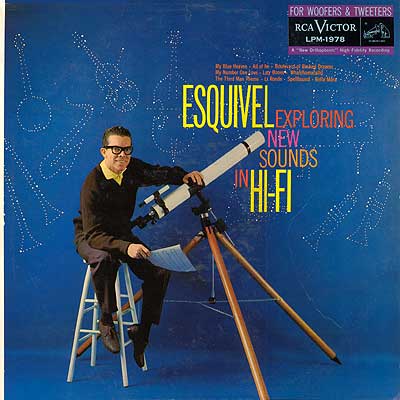
The Palm Springs Museum has a whole show they're mounting of his work. Seriously, NO one did 007 Space Age Bachelor Pad better than Lautner. Almost makes me want to visit Palm Springs again, or listen to some Esquivel.

Thursday, December 10, 2009

Pills 'n' Thrills

The last artist I wanted to speak with whose work I encountered at the Armory Show was Fred Tomaselli. His work really mesmerized me at first, and the more I learned about it, the more epiphanies I had about what he's doing. It may not be immediately apparent here if you've never seen his work in person, but Tomaselli embeds photo-collage and all kinds of different psychoactive substances (mostly pills and capsules) into sheets of resin, usually in complex and beautiful patterns and images. It's really something else. Here's our conversation, for your enjoyment.

Ryan Witte: It sounds like your studio is in Williamsburg, but that you settled there long before it became a hotspot for emerging artists. How has the neighborhood evolved since you first arrived?

Fred Tomaselli: Like many longtime residents, I'm conflicted about the changes both here and in the rest of the city. I also realize that moving here in 1985 made me complicit in these changes. While it's nice to have less crime and more places to eat, it's sad that longtime residents have been priced out of the 'hood. Williamsburg's amazing diversity has been replaced by a self-selecting demographic more homogeneous than the suburbs that spawned it, and it sometimes makes me a little crazy. This has never been a pretty neighborhood, but replacing its cheap, vinyl-sided homes with flimsy, expensive glass-curtained high rises is the latest chapter in its history of architectural mistakes. Still, given the choice, I guess I'd rather walk through a sea of twenty-four-hour party people than walk down desolate streets inhabited by crack heads. Now that the building boom is dead, it would be poetic justice if the unfinished condos were re-inhabited by the very people that were booted out to build them...but I'm not holding my breath.


Doppler Effect in Blue (2002, mixed media and resin on wood panel), most images can be clicked for larger views.
--All images ©Fred Tomaselli and courtesy of the James Cohan Gallery, New York (link at bottom).

RW: I know there was this one moment in my old neighborhood, Hell's Kitchen, after the gentrification had begun. It was this in-between moment where it still had an edge, a grittiness, and some long-time locals, but we were starting to get some good bars and restaurants. That, to me, is New York City. Unfortunately, that moment only lasts for about a month before the Yuppies show up...or about seven minutes in the case of the Meat Packing District: I've never seen a neighborhood get so annoying so fast.

FT: If you've been here a while, it's easy to be cranky about the changes in Williamsburg. But while it can be annoying at times, it's not all bad. For me, the perfect moment here was in the mid-'90s, after we got our first twenty-four-hour deli, a few new restaurants, and home delivery of the New York Times. Even with these new creature comforts, it was still relatively cheap, partially because it was so toxic and ugly. It's still toxic and ugly here, but in a new way, and, of course, it's certainly not cheap anymore.

RW: I imagine your work requires a good amount of space. Is your studio relatively large?

FT: It's a bit less than 1000 square feet.

RW: I'd think the resin might be a bit tricky to work with, perhaps even toxic. Did you go through a lot of trial-and-error at the beginning as you got comfortable with how it behaves?

FT: I've been teaching myself how to use resin since I was a teen growing up in Southern California. Although I'm fairly conversant with the material, I'm still figuring out new ways to make mistakes.

RW: What's the most difficult thing about working with it?

FT: When I'm aiming for a glassy surface, it can be a real bummer to get a chemical reaction that heats up, starts bubbling, fuming, smoking, and threatening to blow up--especially after working for months on an image. When that happens, the surface gets lumpy and full of holes. The last time that occurred, I spent weeks drilling out and patching holes, but I ended up saving the work.

RW: Are disasters ever so fatal you have to just toss the piece and start over?

FT: It's been a while, but sometimes a work can't be saved. But it's mostly because the image is terrible, not because of technical issues.

RW: Your weekly record nights sound right up my alley, and I can think of a few things I might bring to one. Do you still do those?

FT: The Record Club has been together for almost ten years and meets every few months or so.

RW: Oh, "quarterly," I guess I should've said. What were the last few records you brought?


Stack (2009, photo-collage, acrylic, and resin on wood panel)
FT: My most recent selections included songs by Baby Huey, Gal Costa, F*cked Up, Grand Duchy, The Size Queens, Linda Perhacs, Battles, and Dolly Parton & Porter Wagoner. If Record Club were tomorrow, I'd probably play "Down and Out" by Chuck Wells and "Swamp Root" by Harmonica Frank Floyd, despite my current preoccupation with music made in 1972.

RW: Wow, nice. I think your taste in music might actually be as diverse as mine. I'm definitely hearing the undercurrent of 1970s New York Art Rock, though. Were you raised on the likes of Roxy Music, John Cale, or any of the other things Brian Eno touched like Midas?

FT: Sure; and let's not forget Eno's buddy, David Bowie, who produced Lou Reed, Mott the Hoople, and The Stooges.

RW: Who could ever forget Bowie?!


Stack [detail]
FT: Other favorites at the time were The New York Dolls, The Stones, The Kinks, Tim Buckley, Miles Davis, T. Rex, Alice Cooper, Led Zeppelin, Captain Beefheart, and Bob Dylan. With a few notable exceptions, most of these outfits are still important to me, especially Beefheart, Dylan, and The Stooges.

[I provide no link for Dylan out of regard for Donovan.]

RW: Is Punk Rock truly dead, or is that energy now just manifested in different types of sounds?


Echo, Wow, and Flutter (2000, leaves, pills, photo-collage, acrylic, and resin on wood panel)

FT: I think Mashups were the last great revivification of the do-it-yourself Punk ethic into a new sound. I guess with the release of DJ Hero, we can bury that genre for a while. It's too bad, since I was still having fun listening to it.

RW: I'm so glad you said that, because I feel the exact same way, especially with the various different "'core"s. Have you heard Toecutter, by any chance? That guy is freaking insane.

FT: Haven't heard of him, yet, but I'll be checking him out. Punk is the gift that keeps on giving, and I think it's great that there's always some kid ready to reanimate its moldering corpse! Sometimes even the walking corpses do great work, which is why I still get every new release by Mark E. Smith.


New Jerusalem (1998, photo-collage, acrylic, and resin on wood panel)
RW: Have you studied, say, Islamic or other historical decorative patterning in a serious way, or have such things more just inspired your work in the sense of capturing a rigorous visual mood?


Daturatron (1998, leaves, photo-collage, acrylic, and resin on wood panel)

FT: I've studied them, but in a circuitous and undisciplined way.


Organism (2005, leaves, photo-collage, acrylic, gouache, and resin on wood panel)
RW: Did any drug trips influence you more profoundly than others? Would you be willing to describe one of your more memorable ones?

FT: The machine-elves prefer that I not talk about them.

RW: [LOL!] Would those be elves that live in machines or elves that are machines?

FT: They're biomechanical trickster hybrids.

RW: I see.

Glassy (2006, photo-collage, acrylic, gouache, and resin on wood panel)
Are drug hallucinations "fake" perceptions?

FT: It depends on what you mean by "fake," but the good ones are portals to parallel realities. Really.

RW: I believe you. Actually, I asked that in a vague sort of way on purpose, in case you might like to wax on the nature of artifice?


Woodpecker (2009, photo-collage, acrylic, and resin on wood panel)
FT: I've always had a hard time telling the difference between nature and artifice. I guess that all came into focus when I came across my first "real" waterfall on a hike deep in the foothills of Southern California. I couldn't believe it wasn't hooked up to plumbing and ended up searching for its conduit. For me, the unreal is the realest thing there is.


untitled (2002, photogram of marijuana leaves)

RW: Quite by coincidence, while looking into your work, I've been reading The Origin of Species. At one point, Darwin describes how a lot of creatures take on the same coloring as the foods they most often eat, selected, he suggests, because it keeps them more camouflaged from their predators. It's sort of a more scientific way of saying "you are what you eat," I suppose.

Portrait of Bill (1994, gouache and prismacolor on paper)
Do you think it's possible that, if we keep medicating ourselves the way we do for thousands of years, we might actually genetically alter the chemistry of the human body and brain?


Laura (1995, gouache and prismacolor on paper)
FT: I think it already happened a long time ago, when man began experimenting with psychoactive plants and it resulted in the invention of religion. Many of our neuro-receptors have co-evolved with the chemicals we consume, and I predict our brains will continue in that direction. In my lifetime, my perception has been inexorably and permanently hybridized by chemistry.

RW: I sort of think mine has, too.

Fungi and Flowers (2002, mixed media and resin on wood panel)
You believe all (or most) of the first mystics found answers to the nature of mortality and the birth of the cosmos in mind-altered sort of vision quests?

FT: Yes.

RW: One of the many things Oscar Wilde did that shocked people is that he was the first person to allow physical beauty to connote "evil" rather than purity, goodness, and moral fortitude.

FT: He mentioned evil beauty before Baudelaire?

RW: That's what my college literature professor told us. If Baudelaire did it, then perhaps I should ask for a refund of my tuition.

FT: Fine, who am I to argue with a college literature professor?

RW: Well, this was the School of Visual Arts, so their academics might not have been quite as strong as their studio courses...

untitled (Expulsion) (2000, photo-collage, leaves, pills, insects, acrylic, and resin on wood panel)
In any case, is there something inherently dangerous about our ingrained attraction to beauty?

FT: Sure, beauty can be evil, just ask anyone who's addicted to it.


Hangover (2005, leaves, pills, acrylic, and resin on wood panel)

RW: Well, now that brings up two more interesting questions. First of all, what is it about Beauty that allows it to be addictive?

FT: A big part of beauty is the pleasure it provides, and you can't be addicted to something that isn't inherently pleasurable.

RW: Secondly, what is it about addiction that makes it inherently bad? The loss of one's self or self-control?

FT: Addiction gets really bad when you run out of what you're addicted to, which always happens.


Abductor (2006, leaves, photo-collage, acrylic, and resin on wood panel)

RW: Are works of art that strive to be beautiful above all else in some way manipulative?


Red Iris (2008, photo-collage, acrylic, and resin on wood panel)
FT: I think all artists attempt to manipulate the viewer to the artist's point of view, and they do so with a variety of seductions. Beauty is sometimes seen pejoratively, because it's confused with "prettiness." Prettiness is merely beauty without ambition. While they may both look similar, they lead to fundamentally different outcomes. I think that prettiness and beauty both start from an encoded ideal that comes out of human desire, but beauty has an added dose of pathology to rescue it from prettiness, to make it a little strange. I love it when visual balance is used to destabilize and unbalance.

RW: So would you say that "prettiness," being relatively one-dimensional, is easier for humans to agree upon, since "beauty," as you describe it, includes some elusive, mysterious ingredient?


Halo of Flies (2006, mixed media, acrylic, and resin on wood panel)
FT: My kind of beauty is a combination of sensual seduction combined with conceptual underpinnings. My strategy is to first draw the viewer into the space of my work through form. Once they're in, they can think about what it means. I'm looking for a real mind/body experience. But still, beauty and art can't be easily summed up and don't always make sense. It's precisely this lack of understanding that keeps me coming back to it.

RW: Perhaps that's been an allure for me, as well. Thank you so much for taking time to talk, Fred!

Fred Tomaselli is represented in New York by the James Cohan Gallery. Much thanks to them, as well, for use of the images.

Bouquet (2002, mixed media and resin on wood panel)

©2009, Ryan Witte