Showing posts with label New Jersey. Show all posts

Sunday, July 17, 2011

The End of an Eero

My latest excursion was unfortunately a bit of a bust. I'm not sorry I went, for a few reasons I'll get to below. But this won't be the kind of exhaustive story that I might have liked it to be. I've had bad luck with very few other buildings. One of my favorite buildings in New York has eluded me. On a recent trip to see it, we arrived literally one minute after they locked the doors, and the weather chose that very moment in an otherwise perfectly sunny day to send an enormous cloud across the sky. With the exception of the CBS Headquarters, I'm pretty sure this is the last Saarinen building I'll be likely to cover here until I'm able to get down to D.C. again. [Good news, everyone: I actually have two more.]

The good thing about having all my routes entered into Google Maps is that it was immediately apparent that I would pass right by another stop I'd been hoping to make ever since I heard about it a year or two ago. It was so close, in fact, that I was able to get to it in only five minutes to and from the highway. It's what's been nicknamed the "Boat Graveyard" in Staten Island. It's a bunch of very old rusty boats, mostly resting on the river's floor, sitting in this sort of bay.

The unfortunate thing about this stop is that the Google Maps view there is far better than any photo I could have taken. As I suspected before I even arrived, there really is no way to get up very close to it, unless you happen to be in a boat yourself. This website appears to have some pretty nice images of it.

What made this worth the detour for me, though, was that the business that appears to be most closely associated with the old boats is a company called Donjon Marine Co., which was founded by a man named Arnold Witte. In fact, the sign on their building read "Witte Donjon Marine Salvage" or whatever. I really should have taken a picture of it, but didn't think of it at the time. As I've said elsewhere, ours is not a terribly common name. And it appears that pretty much the whole Witte family, John, Thomas, Paul, Matthew, and James, when not busy being Jesus' apostles, all help to run the business.

I walked into their sort of scrapyard or whatever you'd call it and approached one of the guys working there. I asked him if there were any way to get up close to see the old boats. He said "not really," but told me there's a small clearing about a mile down the road to the east where some of them could be seen. He was really very nice and I appreciated his help. I've said elsewhere that I've noticed you can tell how obnoxious an employer is to work for by the attitudes of their employees. If this guy was any indication, the Wittes are great to work for (I'm not surprised). I said "I thought I ought to show you..." pulling out my driver's license and showing it to him, "...my name." "Ryan...oh, Witte, right," and he pronounced it the same as my family does, "witty." "They're the owners of the company, are you related to them?" he asked me. "No, not that I know of," I said, "that is, I'm sure we must be back hundreds of years ago."

In any case, if you're looking for marine salvage services in the New York area, I must highly recommend Donjon. With a name like Witte behind it, I am certain they are the ones to trust.

Unfortunately, the clearing the guy told me about offered only the most limited views and only of a couple of the boats off to the side, not the main cluster of them.

It's possible that if I had driven around to the other side of the river, I might have found a view of the big cluster of rusty boats, but I would have been even further away from them than this. It didn't seem worth it to try, when it might have been as limited a view or as difficult to access as this one. I asked a guy in this auto body shop across from this clearing if he knew of any way to get a better look at the boats, but he didn't seem to think so. I used the restroom at the car wash next door and continued on to my principle destination, Eero Saarinen's Bell Telephone Laboratories Building (first phase 1962, remainder 1967).

I missed my opportunity to get onto the Garden State Parkway, but luckily the road I was on, US Route 9--although very likely slower--took me in more or less the same direction. The essay I'm on at the moment in my reading is a brilliant piece by Michael Stanton, talking about the transition between the urban, the suburban, and the exurban. He has such a clear and deep understanding of the American landscape that I found it incredible he hasn't written more. But it was apropos for me to be in New Jersey, which is pretty much just one giant strip-mall. Route 9 is miles-long stretches of strip malls and big-box retail stores punctuated by cloverleaf turn-arounds, what struck me as being a disturbing waste of the rural geography and a perfect metaphor for the overblown supremacy of the automobile in this country. My Zipcar that day was a Prius, coincidentally. From the moment I picked it up until I dropped it off again, I swear the fuel gauge didn't even seem to budge.

I ended up needing to stop for directions twice, first at a gas station and then at a little motel. I asked the woman at the motel desk if she could help me find the Bell Labs building in Holmdel, which I said is evidently on something called Crawfords Corner Road. She said "oh, that must be the AT&T building." She was close. They actually had a printed list of directions to various different sites in the area that she gave me. AT&T was the listing just above Bell Labs. Bell was listed as "Lucent Technologies," though. Not realizing that Lucent (now Alcatel-Lucent) is the umbrella corporation over Bell Labs, I asked "oh, so Lucent is the company that most recently owned the building?" She said "yeah, it's been called other things, but we call it Lucent around here 'cause we're old school." LOL

Now I haven't been aware of Bell Labs for as long as I'd like to admit, but now that I am, I'm becoming as fascinated by it as I am by 3M or DuPont, the two other research powerhouses that come to mind. I actually learned about Bell in the research I did for Lincoln Center. Harrison & Abramovitz designed the Bell Telephone Pavilion at the 1964 World's Fair and a scientist from Bell, Manfred Schroeder, provided data for the acoustic analysis of Avery Fisher Hall to help determine what was wrong with its acoustics before its 1976 renovation. Bell Labs was in some integral way involved with the invention of the transistor, the solar cell, the laser, the touch-tone telephone, and the launch of the first communications satellite, Telstar. No way should Lucent get credit for all that.

The welcome mat I discovered were a bunch of tiny No Trespassing signs. The entrance is about a mile away from the actual building itself. I could see it, but barely.


I contemplated hiding the car and walking in, but it was so far away! I decided to take my chances. It didn't even look like there was anyone in there. I tried my best to find out beforehand who or what organization owns the building now, someone who I might be able to ask permission (they most probably wouldn't have granted me permission anyway, because of what you'll see below). For anyone who might be reading this who'd have some legal objection to this post, I'll offer you the following protests. I love Saarinen's work implicitly. The building is magic. I spent $70 to rent a car to drive out and see this building alone. I spent over an hour of my time getting there just to see it. This entire blog I think is proof enough that my interest and devotion to the architecture of this building is legitimate. If you still want to press trespassing charges, then I say go right ahead, and for the record, karma is a bitch.

To be fair, I could totally understand why they wouldn't want anyone taking pictures of it. It really is a shame what has happened to this place. It's starting to look like a wildlife refuge.

That isn't the best shot of the geese, but I thought the Heliport sign was so cool. When I first drove in, a deer came out of the woods back by the water tower. I thought I'd snapped a photo of him, but I don't see him in my long shots.

No doubt there was a moment in between when the building was first completed and today, when the plantings had grown in, softening the hard sharpness of the building's modernism, but hadn't turned to weeds. It must have been truly spectacular. But part of the problem, I think, is that Saarinen's landscaping was so rigid and strict. The grounds maintenance must have required an entire army of gardeners. Unlike the more rambling PepsiCo grounds, which I suspect might overgrow somewhat pleasantly if left unattended, the style of Bell Labs' landscaping would demand constant attention to retain its full glory.


The building is truly mammoth, as I discovered when I could see its full expanse. The lake had hundreds of fountains curving through it and also served for air conditioning and a water source in case of fire. Some of those bushes appear to have been allowed to grow unchecked for at least five years. It was at this point that I noticed there were actually vehicles parked in front of the building. For a building this huge, it was sort of spooky to think that there were probably only about ten people inside it. Who knows what they were doing there. But for that reason, I didn't dare get much closer to the building than this. Instead I just drove around the oval ring road, stopping occasionally, getting out and taking a picture. I'm still torn as to whether I would have had better luck going on a Sunday. Likely there wouldn't have been anyone there at all to catch me trespassing. On the other hand, since I couldn't determine who owns the building now, there was much more likelihood of being able to see the inside of it by going on a weekday when there would be people there.


Photo by Cervin Robinson, Yale University Library.
I do really wish it had been possible to see the inside of it. Its atrium looks unbelievably spectacular. It was supposedly the first atrium of its kind ever employed in a corporate building, and was inspiration for the one at the Ford Foundation Building by Saarinen's successor, Kevin Roche.


As sad as it is, I will say that it is an exquisite modern ruin, much like Philip Johnson's New York State Pavilion. And this was another reason I was glad that I went. Seeing the condition it's in now, imagining the exorbitant cost to bring it back to pristine condition, I very much fear for the fate of this building. I have a sinking feeling in my heart that it may not remain standing for very much longer. The good thing about it is that it's probably way too large to go at it with a wrecking ball. What would be the point, anyway? To build something ugly in its place? But if no corporation big enough to handle it finds it appealing, it may just sit there for the next fifty years, crumbling into the ground, lonely, forgotten, and uninhabited, like a giant fossil from a past age.

While I prefer perfectly clear skies whenever possible, the few passing clouds were actually perfect for capturing this building. Without them, the mirroring of the glass would be much less obvious. This glass was allegedly invented specifically for this building and was one of the things that was praised so highly about it. It also reflected the majority of the sunlight, cutting down on costs.

After one time around the loop, my heart racing, figuring I'd be arrested, I decided to go in a little closer to at least get a shot of the building's cladding and front entrance.
As I'm taking this last shot, I see a guy coming out of the building and getting into a little white security truck. I knew he was coming for me, so I jumped back in the car to get the hell out of there. I had all these lies running through my head of the "By the time I saw the signs, I was already inside," or "I just came in to turn around," varieties. After a couple more of those, my conscience kicked in and I got back around to my normal "honesty as best policy" mindset. I decided I would tell him what I said above, how I'd driven so far just to see it that I wasn't about to simply turn around and go home because of a couple of little No Trespassing signs. What harm had I done, anyway?

I passed right by his truck and made the right turn to exit the grounds, watching the rear view mirror with bated breath. He paused at the intersection, I suppose to be sure I truly was leaving, and turned to drive back to the building. How do you spell relief? I took one last shot of the water tower and headed for home.

It had taken me far less time than building visits of yore for obvious reasons. I could be much less exhaustive and I could get no really good looks at the building's finer details. I tried to wrack my brain to think of some other building I could visit with the extra time I had on the Zipcar. I ended up hitting a ton of traffic on the Brooklyn-Queens Expressway. I had just enough time to find the building I was looking for, drive past it, but not enough time to actually park the car and get pictures of it. That building is extremely easy for me to get to by subway, though, which I will do sometime soon. I'll let that be a surprise. The good news is that, for once, I managed to get the Zipcar back to the garage about five minutes before it was due and without sweat running down my face from racing to get it back on time.

One more thing I'd like to mention is this route into New York from New Jersey. Having approached the city from many different directions, I'm struck by how the views are planned. I'm tempted to wonder, as many criticisms as one might be able to fling at Robert Moses, if he didn't do this on purpose. The first one is at the top of the Verrazano-Narrows Bridge (Othmar Ammann, 1964) from across New York Harbor. Of course I couldn't get a good look at that one without getting into a car accident, but it's really spectacular. The second one is even better, and I remember it quite clearly from living in Brooklyn and driving in to go clubbing.

The BQE is sunk below grade up to this point, and then all of a sudden, it rises up under the Brooklyn Heights Promenade, you come around a corner, pass a large building, and BAM there's the great mountain of the lower Manhattan skyline.

I was able to take that picture while still watching the road, don't worry. With a short Google, I couldn't find a photo of what the skyline looked like in 1961, when the BQE first opened, but it must have been breathtaking. I also can't even begin to imagine what the scene was like in this part of the expressway on the morning of September 11th. But for certain those who took this route to commute into the city before and after that day would have had this view as an awful reminder of what is now missing for months afterward. I'm not really prone to all that "greatest country on earth" nonsense of which many Americans are guilty (most of whom have never even left their home state). But every time I saw that view in those first years of living in New York, and I saw it quite a lot of times, it never failed to make me think to myself, "I'm in the center of the universe." The Trade Center Towers helped, as did a setting sun and the buildings lit up after dark, but it still impresses.

Bittersweetly, this marks the end of Saarinen in the tri-state area.

Not to fret, we still have plenty more incredible architects to get through!


All text and images ©2011, Ryan Witte, unless noted.

Wednesday, August 26, 2009

Being Institutionalized

Another of the shows I haven't really had a chance to mention until now was the Armory Show. It was at the concurrent sort of sister show, Volta, where I found the work of Ian Davis. I was fascinated by his scenes and asked him for an interview. Here it is, for your enjoyment.

Ryan Witte: First of all, where do you call home?

Ian Davis: I live in Jersey City.

RW: Do you have a studio there or somewhere close by?

ID: My studio is in Hoboken. I've been there for the last six years but don't recommend it. I've had a great deal on a subsidized apartment in Jersey City, but apart from that it has no perks whatsoever for artists. I'm actually moving upstate at the end of this month, into a house that was built before the Civil War, with a studio in the back yard.
I'm looking forward to it.

RW: Wow, that sounds incredible. Although those old houses can tend to get a bit dusty.

Do you have music playing while you work?

ID: I listen to music constantly. That and NPR, like everybody else.

RW: What kind of music will you usually listen to?

ID: All types of music. For the last couple years, it's been lots of '60s psychedelia, mostly West Coast and English stuff. I'm interested in the way music from that era was crafted. It was weird, sonically, but the song was still important. I think that relates to my work in some way: this idea of things being a bit bent, a bit skewed, but it's still defined and articulated.

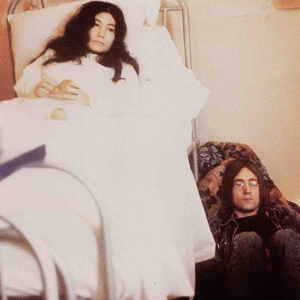
RW: I can totally see that, especially with some of Pink Floyd's really early work. I have this whole weird theory about what happened to music during that time, mostly revolving around John & Yoko's Life with the Lions that I won't bore you with--have you heard their first few solo records? But in my humble opinion, after around that time, the entire way music would be conceived and composed changed so dramatically.

ID: I'm really interested in recordings as opposed to performances. The thing about this music from roughly '66 to '68 is that people started making records that couldn't be performed. The drums are slowed down to give them a certain texture, the guitar is recorded over the drums, but is played by a guy standing in a field, and you get ambient noise behind it, there are backwards harpsichords, etc.. A lot of this music has very childlike sentiments, but there's a darkness there, as well. The Beach Boys made an amazing record called Smiley Smile that has a lot of the feeling I'm thinking of. It sort of creates its own little world.
I don't listen to too much new music, like Indie Rock or whatever. Lately I'm enjoying Fats Waller, The Stone Roses, Ronnie Lane...

Ian Davis, Auditorium (2006, acrylic on Masonite)
--All Davis images courtesy Leslie Tonkonow Artworks.
RW: I notice you seem to prefer working on linen, and only one of the pieces I saw was on Masonite. Because of the kind of work you do, I'd actually think Masonite would be ideal. What is it you like about working on linen?

ID: The supports are just sort of what I have around. Somebody gave me a huge amount of linen, so I'm using that. Masonite is good, but big panels are really cantankerous, so I pretty much avoid using them for anything large. To be honest, I can't really tell the difference between linen and canvas, because once the surfaces are prepared and gessoed and sanded a million times, they act the same. Maybe if I were a different type of painter, there would be an advantage to one or the other, but for the way I work, it's pretty much the same.

Climate (2008, acrylic on linen), click to enlarge.
RW: Do you calculate your perspective by some geometric method or do you work it out by eye?

ID: The way I deal with perspective is anything but scientific. I'd describe the method I use as "good enough."

RW: [LOL]

ID: In other words, I typically decide while I'm making the painting what elements need to be correct-looking for the space to feel somewhat believable, but then I often contradict the perspective in places, so things don't look too static--a little off-kilter.

I use the most low-tech methods for putting things into perspective. It's a little embarrassing. If a painting is big, I have to calculate more (I use the term "calculate" loosely). A lot of masking tape is used. I try not to make things look too settled. But when I'm working out perspective, I'm using sticks and ropes and tape and all sorts of devices. Whatever works. It's not typically a mathematical thing, like Piero della Francesca or something.

RW: So halfway through, they look like one of those Jasper Johns pieces with all kinds of wooden bars and strings hanging off them?

ID: When the paintings are in progress, they look like a mess. I have to rope them in. They're built the way they look, and it's not until I'm about eighty percent done that they start to look like a painting, at all.

Dining Hall (2009, acrylic on linen)
RW: The spaces your subjects occupy are enormous and a few have no visible ceiling. The ceiling in the Dining Hall, for instance, would have to be at least ninety feet high, if not higher. Does being framed by the proportions of a painting guide or distort the environments in it, or do you proportion your paintings to accommodate what will be in them?

ID: The relationship between the spaces and the figures is pretty much worked out on the fly. Sometimes I want architecture to dwarf the people. Sort of like the way the architecture dwarfs Anthony Perkins in Orson Welles' The Trial--this idea of the institution dwarfing the people.
Court scene begins at around 3:45.
I really like the way scale is used in that movie.

RW: It's interesting that you mention that here, because Citizen Kane was remarkable for being one of the first films to ever show ceilings in its interior shots. Most Hollywood movie sets didn't have them so they could be lit more thoroughly, but Welles insisted for artistic reasons.

ID: I wasn't aware of that about Citizen Kane, although I love the movie (obviously) and wasn't aware of some of the lengths he went to to get what he wanted to see. Have you seen The Magnifent Ambersons?

RW: No, I haven't, but I think the man is a genius, and I really should see more of his work.

ID: That's a really good one, too. I don't know why you can't get it anywhere.

RW: Maybe because the final release was so mangled beyond recognition by the studio? It may be too far from Welles' original vision to be of as much interest to his fans as the others.

Anyway, to get back to your paintings...

ID: The sizes of the paintings are not exactly arbitrary, but I don't fuss about it a lot. Occasionally, I'll start a painting and realize that it needs to be bigger and I'll start it over somewhere else. Typically, I'll just fill up the surface of whatever I have.

RW: This is probably a very obvious question in regard to your work, but do institutions breed uniformity?

Guilded Age (2008, acrylic on linen)
ID: I'm not sure that institutions breed uniformity. I hate to take a definitive position on that, but I'd say that that's pretty much the objective of most institutions. I'm just not sure that uniformity is always a bad thing. Usually I'm taking a critical look at some really basic characteristic of human nature such as greed, or opportunism, or conformity.

Excavation (2008, acrylic on canvas)
RW: The gaze of your subjects also seems to be always very limited in scope (to only whatever happens to be lit by the light on their helmets) or focused on one single point in space, one fetishized object. Is there something dangerous about their inability to grasp a bigger, more complete impression of their surroundings?

ID: I think of the figures in my paintings as people who have lost their ability to do anything other than go along with it all. Occasionally there will be a few people sneaking sideways glances, but for the most part they are participants. They stare at a fixed point because they have been told to.

RW: I'm curious about these sideways glancers. Are they checking to see what everybody else is doing so they can properly conform, or perhaps making sure everyone else is doing what they're told, or are they renegades?

ID: I really don't know about the sideways glancers. When I'm painting a crowd, I'm just sitting really close and not stopping to look much. It happens better if I don't constantly check my progress. Occasionally, some of the people are looking at each other accidentally. Sometimes I'll paint a guy and he looks just like my ninth grade geometry teacher or some actor or something. There's a little pause, "oh, I just painted Jan-Michael Vincent..." something like that. Just little accidents. If I were too conscious of doing all this repetitive stuff, I'd never get anything done. A lot of these paintings just become what they are by the virtue of being painted. I think some of the mystery or darkness might just be inherent.

Physicians (2008, acrylic on linen)
RW: Is the culture of institutions somehow self-defeating? In other words, does the necessity to focus resources on one goal or another prevent them from solving the problems they face in a more efficient manner?

ID: I don't really know about the culture of institutions. I don't have a fixed perspective on that. I tend to look at all clubs critically, but I suppose that they are necessary to get things done. I think it's easier to focus on fixing one thing rather than trying to fix everything. I'm just skeptical, because I'm a bit more attuned to observing man's destructive objectives, and how they are often carried out under the guise of "progress."

Strategy (2006, acrylic on canvas)
RW: In the broadest possible sense--that is, divorced from militarism--what constitutes an "army"?

ID: I would describe an army as a group of obedient people who do not function as individuals. But again, I certainly don't consider myself an authority on this, since I've never been in an army. I'm just trying to create masses rather than individuals.

Corporation (2006, acrylic on canvas)
RW: Is corporate culture inherently detrimental to human beings and/ or the planet we inhabit?

Clients (2008, acrylic on linen)
ID: I think corporate culture is repulsive and destructive and requires its participants to feign ignorance of the effects of their actions on the world around them. I don't think this is inherent to corporations, but as long as the accumulation of wealth is the only goal, then everything else becomes insignificant.

Banquet (2006, acrylic on linen)
RW: Have you ever worked in a 9-to-5 cubicle job?

ID: I have always avoided the 9-to-5. When I was eighteen and knew nothing about being an artist, I read a book on Keith Haring where he explained that you can't be an artist unless that's all you're trying to be, which I took very much to heart. I didn't really start painting seriously until I was twenty-one, however. I never had a desire to do any work other than my own.

RW: Do you hope your paintings will be perceived as "beautiful"?

ID: I definitely want my work to be beautiful. That's really important to me. I suppose it's my idea of beauty that might be a bit peculiar. But I'm interested in making a beautiful object. This isn't the only goal, obviously, but I'm interested in a dark sort of beauty.

RW: I definitely think you succeed. But it makes for a strange contrast in your work. While the pieces are formally very pleasing to the eye, the scenes you depict are somehow unsettling and a little bit creepy, which I take to be on purpose...

Thanks, Ian!

Ian Davis is represented in New York by Leslie Tonkonow Artworks:
www.tonkonow.com
212 255 8450

©2009, Ryan Witte

Monday, January 26, 2009

It's a Small World, After All

One thing I've never mentioned here before is that I LOVE me some model trains.  I suppose this isn't really Architecture, but some of these set-ups are so elaborate that they come pretty darn close. Just a lot smaller. I also think there's something obviously akin to Urban Planning involved here. If nothing else, they require an intimate understanding of the ways we organize our structures and transportation routes in the real world so that, however compressed, they won't appear awkward or unrealistic in miniature. Getting really involved in creating something like this, psychologically speaking, I'm sure requires some amount of God Complex.

Model railroads focus attention on our world in a number of interesting ways. They tend to favor the built environment and especially industrial areas that typically have much more rail traffic. There is a favored time period, near the turn of the twentieth century, when rail travel and heavy industry were at an all-time peak. In general, they favor environments and scenes that have the most mechanical components (like amusement parks), with the most inherent motion. But, despite the fact that these layouts are heavily populated, they would seem to favor a universe devoid of human beings and other animate creatures, because they can't be simulated as realistically. I suppose looking to automata, which have been around for hundreds of years, it would theoretically be possible to give the little human figures motion. But with the huge number of them in a single layout, it would hardly be realistic to attempt it.

Up until now, I'd thought that the most incredible model train layout was the holiday exhibit at the Carnegie Science Center in Pittsburgh.
--Photo courtesy Bob Fazio.

--Photos courtesy Josh Aronoff.
The lighting in the room slowly changes from day to night, all the lights in the village come on, and then it goes back up to day again.  I think the process takes around a half hour all together.

--Photo by Michael Orban.
It's still incredible. It looks especially large when you're only seven years old, but it's around eighty by twenty feet.  The rivers of real water and boats sailing around them are great.  It also has tons of animated scenes, there's a kid swinging on a tree swing, kids flying kites that actually float around in the air, all kinds of fun things they say are "only viewable from a child's point of view."  But what I suppose is most impressive about their layout is how very educational and historical it is. All throughout the layout are historical scenes like a Women's Suffrage parade, an African American baseball team, replicas of real structures from the history of coal mining and steel smelting.  It's like an elementary school teacher's dream come true.

--Photos courtesy Jaaron Farr.
Pittsburgh really is the perfect place for something like this, too, since the steel magnates made their fortunes from the westward expansion of railways, Andrew Carnegie himself probably more than any other.

MIT students started a fairly impressive model railroad in 1946, still running today. They're the Tech Model Railroad Club, and they allegedly coined the term "hackers," referring to something other than computer vandals.  Their layout is far more urban and industrial than most. Their website explains that originally the club was mostly electrical engineering students who were more interested in control systems than with scenery. The switching controls they created for the layout were evidently quite sophisticated for the time and used mostly surplus equipment from the telephone industry.

Then there's this very large layout in New Jersey, The Great American Railway at Northlandz. It's a little bit excessively mountainous, but it has some very impressive bridges. The longest of them is forty feet long, although the engineering of the bridges is questionable at best, to the point that they don't really look like any real bridge. They have over a hundred trains running per day. The walk around it is said to be a mile long, and it's said to be the largest HO-scale layout in the world.


In my opinion, the most mind-boggling of them all is the Miniatur Wunderland in Hamburg, also claimed to be the largest model train layout in the world. Listening to their statistics, it's quite safe to say it makes Northlandz look childish. They run over 800 trains, the longest of which is several meters long. They have actual ocean liners and cargo ships floating around in enormous lakes. It's also a hundred times more realistic.
It's completely out of control.  I'd love to visit.

Miniatur Wunderland has a factory that produces what appears to be chocolates. After the tiny people make this giant slab of chocolate, it pops out the bottom so the visitor can eat it. I have no doubt that it's a pre-packaged chocolate only appearing to have been made by a miniature factory. But it would be remarkable to see a miniature set-up like this that would in reality produce a product from start to finish. For instance, haul raw materials in from all different parts of the layout by train, unload them into a miniature factory, and bake miniature loaves of bread or something. I can't think of any product off the top of my head that wouldn't be restricted by the actual size of things like eggs in the case of bread. There must be something, though.

©2009, Ryan Witte